 Free quote
Roof & Moss Treatment
Moss treatment and roof debris clearing for Mt. Hood Corridor and Sandy homes. No pressure washing on shingles, ever. Free quotes.
Moss on an Oregon roof is not a cosmetic problem that eventually becomes a structural one. It is a structural problem from early on, and it is simply invisible until there is enough of it to see from the driveway.
We clear debris off the roof surface, treat the moss, and let it die back and weather off. What we do not do, at any price, is put a pressure washer on asphalt shingles.
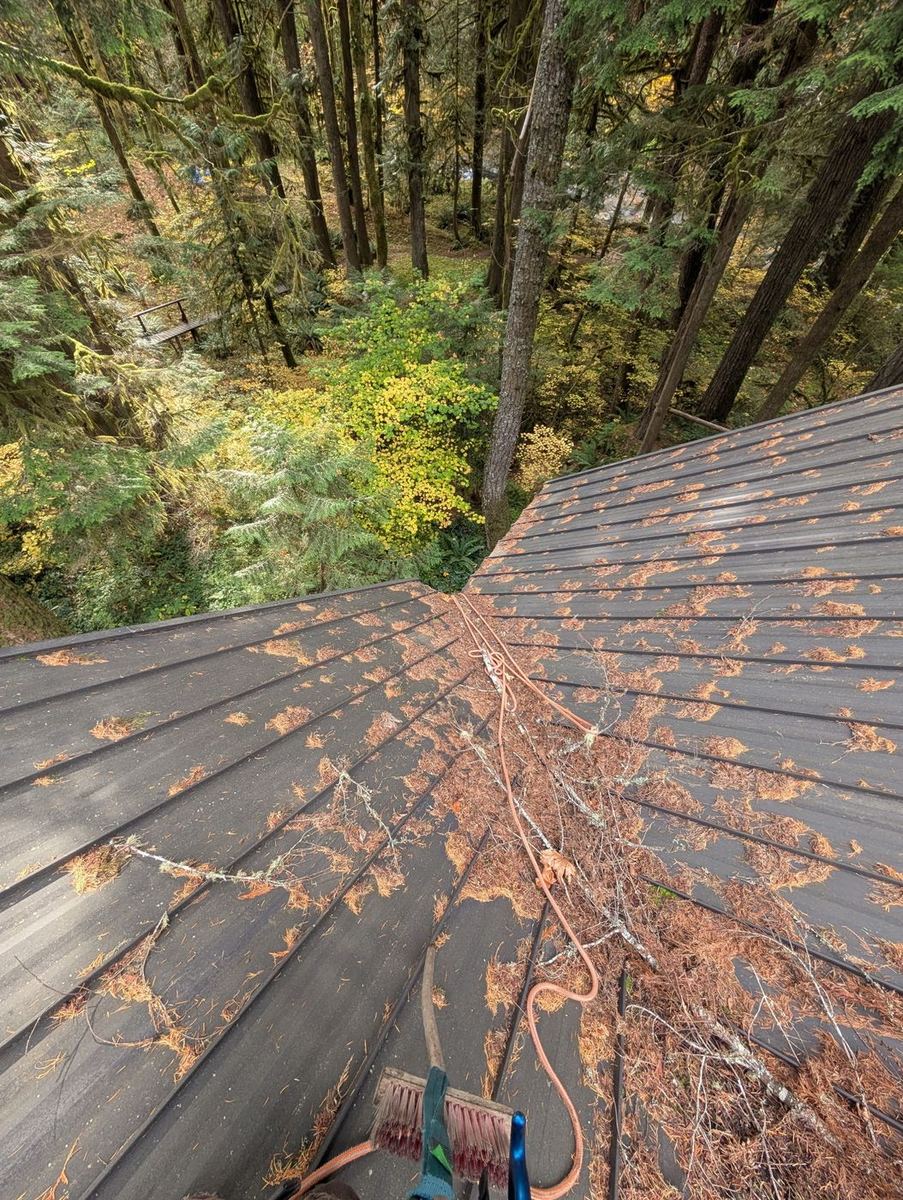
An asphalt shingle is a mat saturated with asphalt and surfaced with ceramic granules. Those granules are not decoration. They are the roof's UV protection and its entire abrasion layer, and the asphalt beneath them degrades quickly once exposed.
A pressure washer strips them. Not all at once and not visibly from the ground, but a washed roof sheds granules into the gutters for months and loses years off its life. Worse, high-pressure water driven upward gets under the shingle courses and into the underlayment, which is the one place on a roof water is never meant to reach.
It looks fantastic for a season. That is the entire appeal, and it is why it keeps being sold.
The method that actually works is slower and less dramatic: clear the loose material, apply a treatment, and let the moss die and wash off over subsequent rains. A roof treated in spring often looks its best months later.
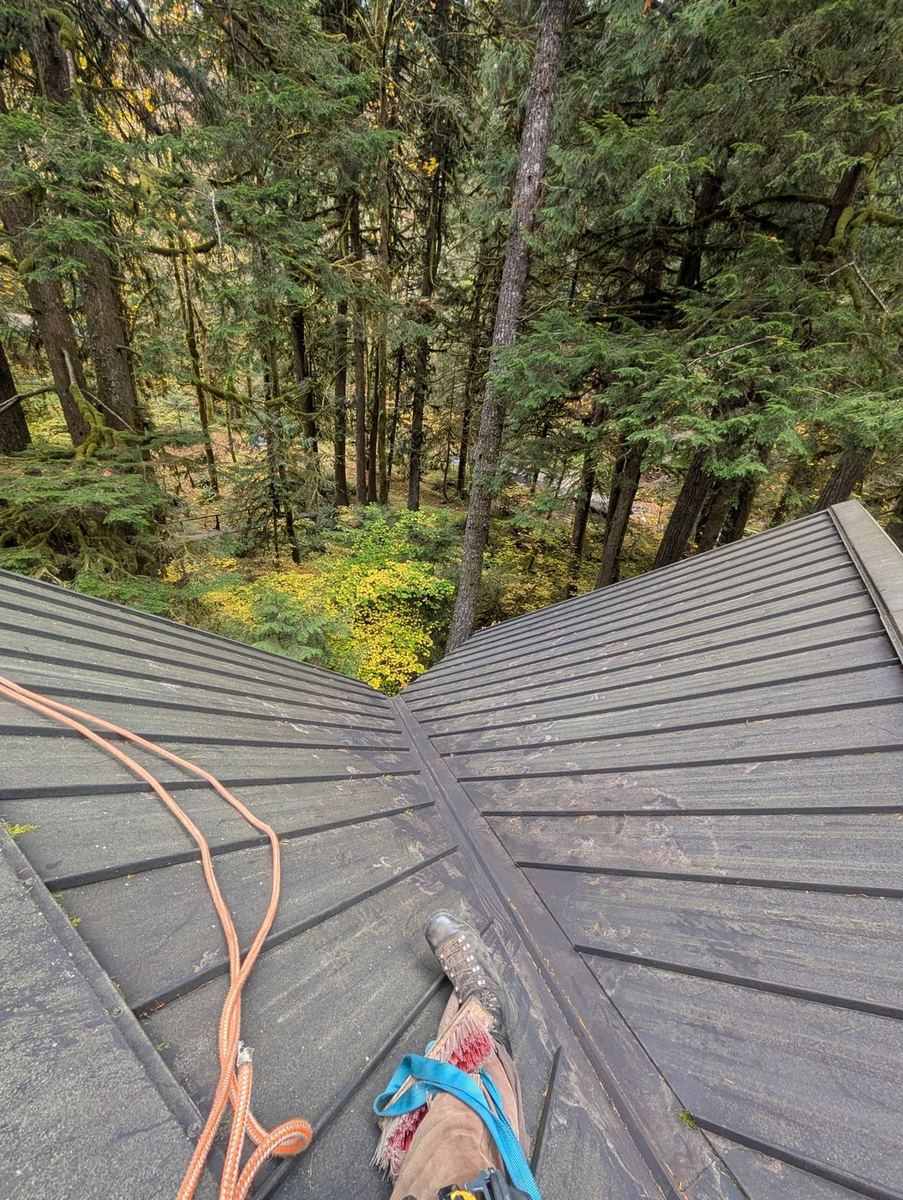
Three conditions, and the corridor has all of them. Consistent moisture for most of the year. Shade, from the canopy that makes living here pleasant. And a constant supply of organic debris — needles — that holds water against the surface and gives moss something to root into.
North-facing slopes go first because they dry last. Anything under an overhanging branch goes next. Valleys and the low edge above the gutter line hold debris and follow shortly after.
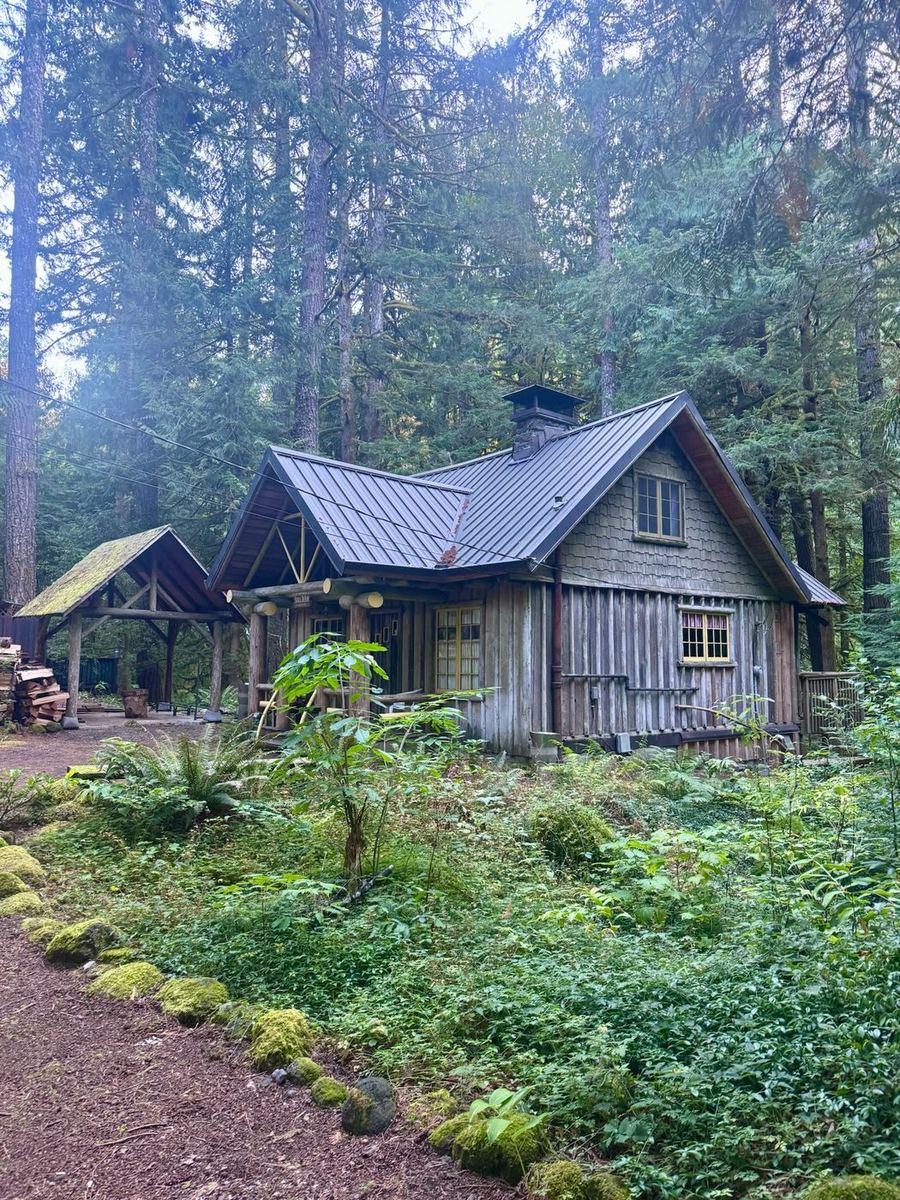
Moss holds water directly against the shingle, permanently. A roof that never fully dries deteriorates faster than one that wets and dries.
It also grows into things. Moss works its way under the bottom edge of a shingle and lifts it, and a lifted shingle is an opening. In freezing weather the water held in a moss mat expands, which levers that edge further every cycle. Over several winters, growth that started as a green film along one course becomes lifted, curling shingles and a genuine leak path.
Then it sheds into the gutters, which is how a roof problem becomes a gutter problem.
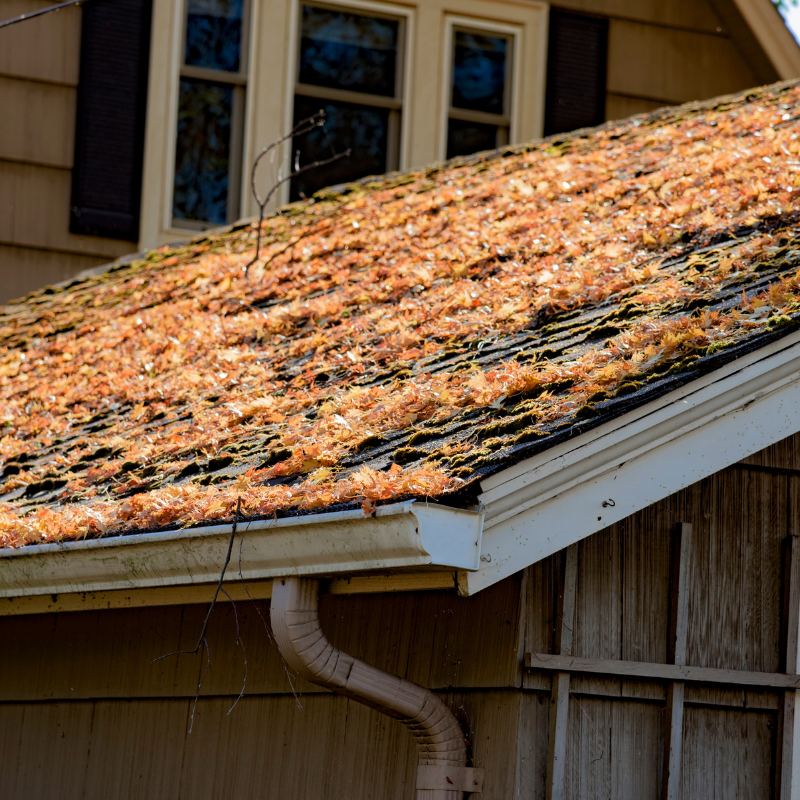
We start by getting the loose material off — needle mats, branches, accumulated debris in the valleys and along the low edge. A great deal of what people think is moss is debris with moss growing in it, and removing it is half the job.
Then the moss gets treated. Surrounding planting is covered or pre-wet and rinsed afterwards, which matters more here than in most places given where the runoff ends up.
Then you wait. The moss dies, goes brown, becomes brittle and weathers off over following rains. We will tell you honestly how long that takes for the amount you have, which is usually longer than people want to hear.
There are a lot of cedar shake and shingle roofs in the corridor and they behave nothing like asphalt.
Cedar is organic, so moss does not merely sit on it — it holds moisture against timber that then stays wet, and wet cedar rots. At the same time cedar is more fragile underfoot than asphalt and far less tolerant of aggressive chemistry. Products that are fine on a composition roof can strip the natural oils out of shake and leave it grey, brittle and considerably shorter-lived.
So shake gets treated differently and more carefully, and the debris clearing matters even more, because material trapped between courses is what keeps the timber damp. If your roof is cedar, say so when you call.
Sometimes the honest answer is that cleaning is not the job.
A roof where moss has been lifting shingle edges for several winters may already have water under it. Curling, cupping, bald patches where the granules have gone, soft spots underfoot, daylight visible in the attic — those are roofer problems, and treating the moss on top of them is money spent tidying something that needs replacing.
We would rather tell you that at the quote than take the work. It is a short conversation and it saves you a few hundred dollars on a roof that has a year or two left.
Almost everything that ends up in your gutters came off your roof, and almost everything growing on your roof is growing in trapped debris.
Clearing a roof and then leaving a gutter full of the same material is half a job — the next rain washes the loosened debris straight into a blocked trough. Done together, in that order, each one makes the other last longer, and it is one visit instead of two.
Included
Typical range: Quoted per property
Reviews
Kris was easy to work with and quick to respond. We had him clean up our roof and clear out the gutters before the rain comes. He did a great job, communicated well, and best of all, we have a free flowing gutters now. Will definitely hire again.Jessica S.
Just had our roof cleaned by Kris Klug who owns "UNDER PRESSURE EXTERIOR CLEANING"! Highly recommend! Prompt! Courteous! Honest! And Reasonably priced!Steven G.
Oh my! Someone not on Mountain Time! Kris shows up and does a fantastic job! Hubby not on the roof this year, thank you Kris for your help!Cloanne G.
Good experience with UPMH, prompt response & fair price - roof and gutters now ready for winter. Would recommend !Miles W.
Professional estimate. Quick response. A fair price. We look forward to working with this company.Patricia E.
Reviews from Google · read them all
Coverage
What this job looks like in Brightwood specifically.
Questions
They can help as prevention on a roof that is already clean, by putting a small amount of metal into the runoff each time it rains. They are not a treatment for an established problem and they do very little on the parts of a roof the runoff does not reach. Worth discussing after a roof has been cleared, not instead of clearing it.
No, and anybody promising that is describing a pressure wash. Debris removal makes an immediate visible difference. The moss itself dies over weeks and weathers off over months. It is a slower result and a considerably better one for the roof.
Usually not, but the honest answer depends on the condition underneath. Thick moss that has been lifting shingles for several winters may be sitting on a roof that is already near the end of its life, and no cleaning fixes that. We will tell you if what you actually need is a roofer.
Yes, and there are a lot of them at elevation. Metal is more forgiving than asphalt but debris still collects in the valleys and at the fixings, and moss will grow on a north-facing metal panel quite happily.
The drier months are better for treatment, and it gives the moss a full season to die back and weather off before the heavy rain returns. Debris clearing is worth doing whenever it has built up.
Get in touch
Need help with your roof, gutters, exterior cleaning, or holiday lights? Call or send us a message and tell us a little about what you're looking for. We're happy to help!
Call (503) 272-1238